
The Saint Louis Cardinals story begins all the way back in 1882. Jeff Dobslaw found them as fast as he could. But let's start our journey in 2011, with the Cardinals on the brink of World Series elimination.
October 27, 2011. Texas Rangers vs. St. Louis Cardinals. Game Six. One of the wildest nights the game of baseball has ever seen. For a good part of that night, it looked as though the story was already written. The Rangers could almost smell the champagne. The St. Louis Director of Finance obliged.
The Rangers were one strike away—twice!! —from clinching their first World Series crown. In the ninth, with St. Louis trailing 7–5, David Freese dug in, two outs, two strikes, and sent a fly ball deep over Nelson Cruz’s head in right (Texans will swear it’s a ball that should have been caught). Either way. Tie game. Bedlam.
The Rangers punched back in the 10th, Josh Hamilton crushing a two-run homer that silenced the crowd – it was a play that presumably made him the hero. But the Cardinals weren’t finished. Again down to their final strike, Lance Berkman delivered a game-saving single through the middle, pulling them even at 9–9. Then came the 11th. Freese, the hometown kid already a hero, launched a towering shot to dead center. He dropped his bat, raised his arms, and Busch Stadium erupted in disbelief. A game of gut punches and miracles, of heartbreak and euphoria—this was the night the Cardinals refused to die, and baseball history was written in neon.
It wasn’t until the ninth that Jeff’s son called him up.
“My wife is AT the game. I’ve gone to bed because, at 7-4, I figure the Rangers are ready to win it. My son calls me and says ‘Dad, we’re threatening to tie the game!” Jeff recalls. “And then, RIGHT after Freese’s home run in the 11th, I ran to my computer, got on Stub Hub, and purchased two tickets to Game 7 of the World Series.”
Two nights later, of course, Jeff and his son reach the summit of St. Louis baseball fandom: They witness, in person, a World Series title.
He’d been a Cardinals fan before, and remains one today, but that night (and especially the night of game 6) will live on forever. A World Series title doesn’t just live in a fan’s mind—it takes up permanent residence.
In a town rich in sports lore, given its deep history with the city and the connection it’s made with its people, it’s hard to argue just how powerfully the Cardinals rule. So how does longtime Cardinals fan Jeff fit in with the fanaticism? Let’s step back 100 years or so.
Long before streaming apps or satellite packages, the St. Louis Cardinals built a national following through the power of one extraordinary signal. KMOX 1120 AM, with its 50,000-watt clear-channel reach, carried the crack of the bat and the roar of Sportsman’s Park into farmhouses, small towns, and big cities across America.
On clear nights, its voice could stretch for hundreds of miles, pulling in listeners from the Dakotas to Texas, who suddenly found themselves part of Cardinals Nation. This was a unique situation in professional sports: a single radio station that didn’t just serve its home market, but created one of the largest fan bases in the country by turning distant listeners into loyal supporters. Through KMOX, the Cardinals weren’t just St. Louis’ team—they became “America’s Team” for anyone within reach of that powerful signal.
It was very much because of the KMOX reach that people like Jeff, who grew up in Iowa, kept their finger on the pulse of the successful ballclub.
After all, when KMOX was at the height of its reach, the Cardinals were not only being heard far and wide, they were also giving fans plenty to cheer about. From the 1920s through the 1980s, the franchise was one of the most successful in baseball. Fans tuning in from farms, small towns, and cities hundreds of miles away weren’t following a middling ballclub—they were connecting with a perennial contender.
The Cardinals won nine National League pennants between 1926 and 1946, powered by stars like Dizzy Dean and the Gashouse Gang, then by Stan Musial, whose steady greatness kept the team nationally relevant for two decades. In the 1960s, with Bob Gibson dominating on the mound and Lou Brock electrifying the bases, the team added three more pennants and two World Series titles (1964 and 1967).
Jeff, a Northern Indiana native and childhood Chicago White Sox fan, moved to St. Louis in 1991, fresh out of college.
“My father had instilled in me a love of baseball. So when I moved to Saint Louis, they had this program where you could get day-of-game tickets for $4, as long as you lined up before the game,” Jeff recalls. “My buddies and I would go stand out there and line up a couple of hours before the stadium opened, we’d go in and Sit in the bleachers and get sunburned and have hot dogs and a beer and cheer on the Cardinals.”
He moved away for four years, but when he returned, the Cardinals were really heating up – one player in particular, Mark McGwire.
That year, McGwire was in a famous home run race with Sammy Sosa of the Chicago Cubs. Both men were chasing Roger Maris’s single-season record of 61 home runs, which had stood since 1961. McGwire broke the record on September 8, 1998, hitting his 62nd home run off Chicago Cubs pitcher Steve Trachsel at Busch Stadium.
“I wasn’t there for 62, but I was there for 70,” Jeff said. “That whole homerun chase really got the stadium excited, the town excited, and people coming from out of town to witness it excited. For me, that was the beginning of the Cardinals becoming a civic institution again.”
It’s an answer that spans decades, with ebbs and flows, highs and lows (the current time being one of the lower periods), yet a persistent focus on winning.
The Cardinals became a civic institution in the early 20th century by representing not just St. Louis but much of the Midwest and South, thanks to their geographic reach and powerful KMOX radio broadcasts. Branch Rickey’s farm system kept a steady stream of talent on the roster, and championship teams in the 1920s through 1940s—fueled by colorful personalities like Dizzy Dean, the Gashouse Gang, and Stan Musial—made the franchise a symbol of grit and pride during the Depression and WWII years.
Decades later, the late 1990s brought renewed stability under Bill DeWitt Jr.’s ownership, a stronger downtown connection with Busch Stadium, and of course, the national attention during Mark McGwire’s 1998 home run chase. Consistent winning, a player development philosophy known as “The Cardinal Way,” and a passionate, multigenerational fan culture have since reinforced the team’s place as more than a ballclub, but a defining part of St. Louis’s civic identity.
But as the decades go by in the same way that a long baseball season tip toes towards October, it comes down to the moments. Moments like Sept. 27, 1998 when Mark hit his 70th. Or Oct. 27, 2011, the night that David Freese sent “chills” down the spines of fans wearing Cardinal red. Or two nights later, the night Jeff and his son witnessed a champion.
In a town passionate about its sports, the Cardinals represent a fan culture that spans generations, and a grip on St. Louis that likely won’t let up anytime soon.
“It’s a commitment to excellence. They created expectations that they would have a team that would compete every year. They did that and people would show up,” Jeff said.

Director of Finance - Saint Louis Office
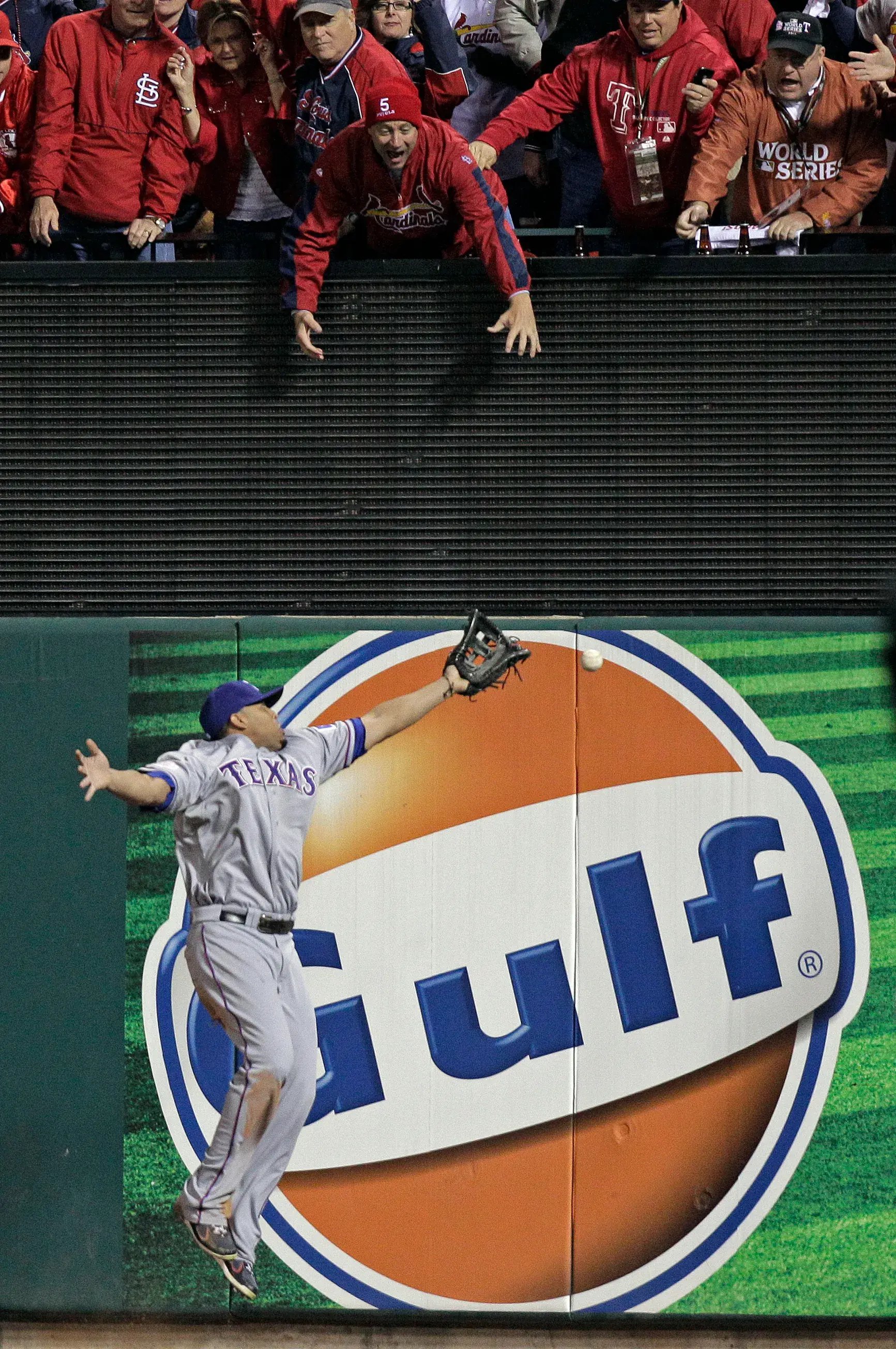
For those Texas Rangers fans seeing this for the first time since 2011, we'd remind you that access to Datamax Employee Assistance Program is a valuable benefit!!!
DALLAS/FORT WORTH | EL DORADO | FORT SMITH | HOT SPRINGS | JONESBORO | LITTLE ROCK
LONGVIEW | LUFKIN | RUSSELLVILLE | SAINT LOUIS | SULPHUR SPRINGS | TEXARKANA | TYLER