“You’re too small. We’re not going to let you try out for the team.”
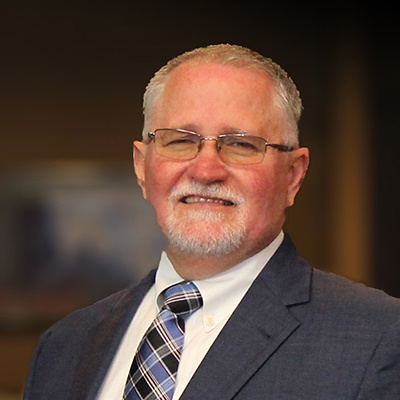
It was a phrase Texas Vice President of Service Steve Kennemer will never forget. The coach’s words left him dejected, but more so determined. They didn’t just inspire the best out of a young Steve Kennemer. They framed the trajectory of his life.
Steve came into seventh grade in Wichita Falls, TX at around 100 pounds, and when it was time for football tryouts, the coach wouldn’t even let Steve try out for the team. The risk of him getting hurt, it seemed, was too great. This motivated Steve tremendously to prove his coach wrong…. To do whatever it took to earn his spot on the roster the next season.
There are several life lessons Steve learned on the Gridiron that propelled him forward, absorbing words from coaches as well as his own father. In sports, being called up refers to a decision to bring an athlete to play in a higher league. Throughout his career, Steve has been called up again and again in this industry, from service technician to service manager to executive. But it’s those early life lessons he learned from the game of football that he credits to his ascent.
After a year of hard work, Steve made the team.
“All summer long, I’d get up every morning and work out. I changed the way I ate. I had a goal and I was going to make the football team,” Steve recalls.
When he came back in eighth grade, he was 14 inches taller and 60 pounds heavier. The coach asked him what he had done.
“You told me I had to grow and put in the work, so that’s what I did,” Steve recalls telling the coach.
That year he started on offense and defense. The only time Steve came off the field was for kickoffs. He went on to play his Freshman year, and then made varsity his sophomore year.
Even still, he didn’t feel a part of the team.
Visiting with his dad one evening, he reflected on the fact that he had set his goal and achieved it. But he didn’t really feel like part of the team.
“I’ll never forget what my dad said next,” Steve says. “This is a lesson you’re going to need to learn. You don’t just join a team. You earn the right to be part of that team. You need to be the first one on the field and the last one to leave it. Show you’re working just as hard, you’re helping people, and the team will want to join you.”
So that’s exactly what Steve did. He went on to start at middle linebacker on defense and weak side guard on offense for the duration of his high school career. He was still small, but he was strong and fast. Steve was also willing to do his homework.
“Another thing my dad used to always ask me was, ‘what are you going to do to help your team?’ Not ‘what are you going to do for yourself?’ Often times that meant staying up to study my playbook…My dad’s philosophy was that on any given day, if you learned something, and you shared your knowledge with someone else, it was a successful day. I hold onto that today at Datamax.”
After high school, he went on to start a career as a technician at Dyna Systems (a gig he had taken on part-time while in high school). He was later named the Service Manager, and stayed with the organization for 22 years.
But Steve wanted more. It was time to get called up again.
“I wanted to be with a Top 10 Canon Dealership that was leading the industry in technology. I found Datamax,” Steve recalls. “There was an opening for a field technician, so I took it (along with a cut in pay), but it was a company that was going where I wanted to go.”
The call-ups kept coming. Steve moved his way up through Lead Technician, Field Supervisor, Field Service Manager, Director of Service to his current position of Vice President, Service for Datamax Texas operations.
All those Team principles from the field apply at the office.
“You have to earn your spot on a team.”
Steve wants to work as hard or harder than anyone around him. He’s at the office at 6:45 every morning and doesn’t typically leave until 6 p.m. If there’s an issue, he’s available to provide that help.
“If you learn something and share knowledge with someone, it’s a successful day.”
In key-person interviews, Steve is often asked for advice. He shares that sentiment from his father. The teaching and sharing of information have helped his service department develop through thoughtful collaboration, fresh ideas, and a constant pursuit of improvement. He says that every success he’s had, it’s because of team success.
“I tell every new service technician… what’s the secret? How do you succeed at Datamax? My simple answer is be part of the team. If you do that, you’re going to succeed.”
Just as Steve did on the field decades ago, you’ve gotta earn that spot.
“It came back to those basic principles. You set a goal. You work hard. You earn your spot on your team. And you’re always willing to do as much or more than anyone else around you,” Steve says.