It was not an unconventional or overly stunning post, by most accounts. But yet it resonated. The idea was so simple.
Marcus Sheridan, acclaimed author of “They Ask You Answer,” speaker, and leading marketeer in the office technology space, was talking about newsletters. However, the manner in which we message public audiences at large was clear. Inside his LinkedIn post, he mentioned that talking about ourselves can be fine, and maybe even brings the applause, but it NEVER makes the audience feel, and act as their own hero.
He concluded the post with this: “Remember, it ain’t about us folks,” followed by a hard return.
“It ain’t about us.”
Then who's it about? It’s About 'YOU.'
The irony? Almost simultaneously, Marketing was formulating a similar MO – their 2022 Marketing Theme, “It Ain’t About us.”
“In December of last year, Jeff and I were discussing and redefining our content focus and objectives going forward,” Vice President of Marketing Robert Caldwell Said. “Inspired by a Marcus Sheridan (renown Marketing Keynote Speaker and Consultant) LinkedIn post, it seemed pretty clear what we should focus on. As Marcus intimated, most company marketing informational correspondence is nothing more than humblebrags. “
As a result, the team has been actively tweaking and aggressively modifying content to make a connection with “YOU” (the customer). Within key website title tags and calls to action we are incorporating the word “YOU” which helps govern what exactly we are saying or asking. It is a fundamental for the team going forward.
“For sure, it ain’t about us, it’s about how we make the customer a Hero,” Caldwell said.
It’s About 'YOU' and your experience With Datamax.
It’s not just about 'YOU.' It’s About YOUR experience with Datamax as your technology partner. And, frankly, we'd love to hear bout it. (Hint... this is where YOU, the Datamax employee, come in. Read on to find out how).
There is no doubt that company reviews (whether B2B or B2C) are playing more and more an important role in whether prospects enter, remain in, or vacate the sales funnel today. Think about your own life. It’s probable that most readers of this article leverage reviews for their own personal buying decisions.
In fact, based on a publication by moz.com, The Impact of Local Business Reviews on Consumer Behavior | SEO Industry Report ( https://moz.com/local-business-review-survey-report/habits-of-review-readers ), over 56% of buyers surveyed turn to reviews on a daily or weekly basis, with another 18% on a monthly basis.
Trust is the key, and with 86% considering reviews to be a most important or somewhat important factor, we’ve got to do a better job of soliciting our own customers affirming feedback, Caldwell says.
So, how and where do we start? Based on the question, “Which review sites do you spend the most time on reading reviews?” 79% used Google Reviews. Google’s dominance as a search engine has given it a natural advantage as an already-familiar resource for reading reviews, enabling it to outpace even those platforms which were developed solely for publishing buyer sentiment.
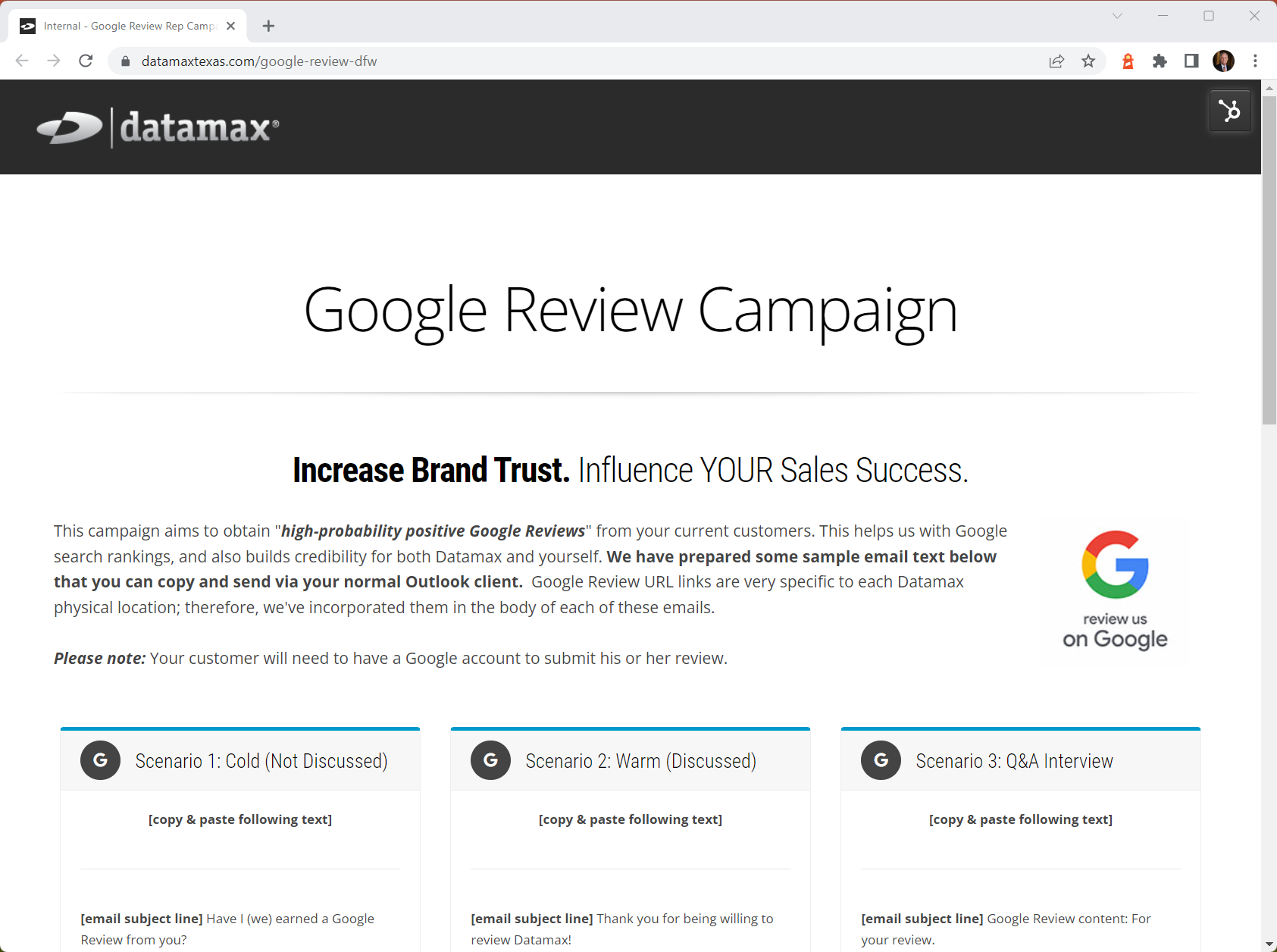
"In the weeks ahead, the Marketing Department will begin promoting a Google Review Current Customer Resource for you to leverage. Whether you are in sales, service, admin, or wherever, we hope you will consider asking happy customers you are working with to complete a simple Google Review. We would be happy with just a simple rating that takes 3 quick clicks. Comments are certainly the gold standard if we can get them,” Robert added.
Through additional reviews, we hope to impact the following five things:
- Increase Brand Trust
- Gather Valuable Customer Intelligence
- Increase Online Exposure & Local SEO
- Increase Web Click Through
- Convert More Customers
.jpg?width=500&height=500&name=Robert-Caldwell-(Avatar).jpg)