Do we respectfully disagree? Of course, we do from time to time. But is it really respectful?
Disagreements in the workplace are common and can actually be healthy for fostering creativity and diverse perspectives. It's important to approach disagreements in a positive manner to maintain a respectful and productive work environment.
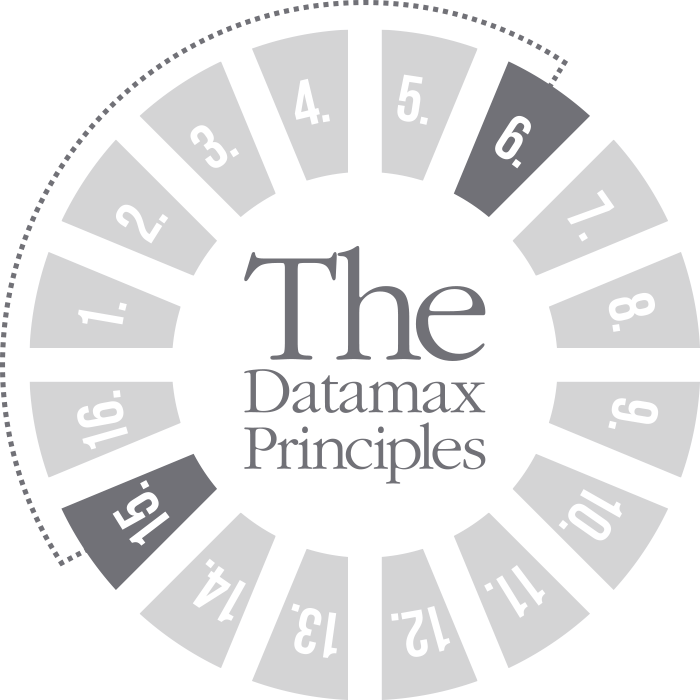
Sure we’ll disagree at times at Datamax, too. But how do you do that? What does that look like? Paying mind to Datamax Little Blue Book Principle #15, “We have the right to disagree,” and Principle #6, “Make decisions based on the good of the entire organization,” we introduce the 15/6 Principle. 15 respectful ways to disagree so that you can maintain a positive working relationship while still getting your point across, all while looking after the interest of the organization at large.
Note: Click on the "+" to expand each statement and read more.
The 15/6 Principle: 15 Ways to Respectfully Disagree with Your Datamax Peers.
Take the time to actively listen to the other person's perspective without interrupting or dismissing their ideas. Show genuine interest and empathy to understand their point of view.
It goes without saying, right? Even so, disagreement can (and should) be cordial yet candid and effective. Don’t try to manipulate the situation as one former coworker might have done, such as playing the victim. Another might always be on the attack saving up ammunition to hit their coworkers with everything. Neither tactic would be successful, and your professional reputation will suffer.
In other words, only speak for yourself. Frame your disagreement using "I" statements to express your opinion or concerns without sounding confrontational. For example, say "I see it differently because..." or "I have a different perspective based on...".
Leading with questions shows others that you know you do not have all the information and value their perspectives about the topic. Taking time to ask questions to understand the situation better doesn't stop you from sharing your challenges; it just means that you choose to ask questions to understand other views of the situation before sharing yours.
Ask yourself the following questions to help you be clear about the matter at hand: What do you disagree with? Describe it clearly, be articulate and detailed if necessary. How is it making you feel? Outline what effect it is having on you, the team, or your life.
Instead of simply pointing out flaws or criticizing ideas, offer constructive feedback that suggests alternative solutions or improvements. Focus on the issue at hand rather than attacking the person presenting the idea.
Look for areas of agreement or shared goals to establish common ground. Emphasize the points of agreement first before discussing the points of disagreement. This approach can help build rapport and facilitate a more collaborative conversation.
Back up your disagreement with facts, data, or examples that support your viewpoint. Providing evidence can lend credibility to your argument and demonstrate that your disagreement is based on thoughtful consideration.
Recognize that you may not always get your way, and be open to finding a middle ground or compromise that satisfies both parties. Show a willingness to explore alternative solutions that address everyone's concerns.
If the discussion becomes heated or emotions escalate, it's sometimes best to take a break. Step away from the conversation and allow everyone involved to cool down before revisiting the topic later with a fresh perspective.
A lot of the time, a disagreement can remain an amicable conversation when you simply validate the other person's point of view. This shows that you respect their perspective even though you don't agree with it.
If you want to come across amicably, it's best to qualify everything you say. This reinforces that what you're arguing for is merely a matter of perspective. In doing this, you make room for your colleague to change their mind.
One way to politely disagree with someone about a work matter is to assume innocence. In other words, don't think that the person was intentionally misleading you or quoting false information.
A good example of a structure is the PREP model for disagreement. P= Pause, R= Respect, E= Express without “but,” P= Pause.
Throughout the discussion, focus your discussion on shared interests and desired outcomes. That outcome, of course, is aimed at the best interests of you, your coworker, and your organization at large.
Remember, the goal of disagreements in the workplace should be to find the best possible solution or outcome. By approaching disagreements with respect, open-mindedness, and a focus on constructive dialogue, you can maintain positive relationships and contribute to a healthy work environment.