“It’s not strength. It’s synchronicity.”
These are the exact words from the designated coach for the Datamax team of rowers as they approach the dock. One by one, they file into the 46-foot-long boat. Veteran rowers will agree, and first-time rowers will soon discover: His words are spot-on for all participants at this year’s River Cities Dragon Boat Festival. To get out of sync, whether by not paying attention, moving your eyes away from those in front of you, or simply by trying to row harder than someone else, is to quickly decimate your chance to win.
A team that pulls together usually wins.
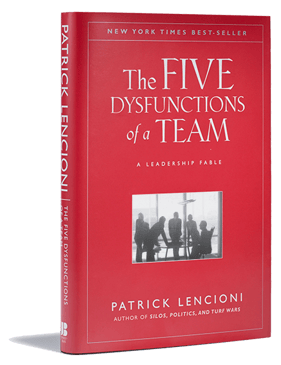
Patrick Lencioni, author of “Five Dysfunctions of a Team,” knows all about rowing — more specifically, doing so in synchronization. On the first page of his book, he writes “If you could get all the people in an organization rowing in the same direction, you could dominate any industry, in any market, against any competition, at any time.” Lencioni goes on to discuss the pyramid of “dysfunctions” of any business team that deflects them from achieving ultimate success.
Datamax Texas President David Rhodes knows all about this book. After receiving it from a long-time friend and Datamax consultant Mike Riordan, David passed it on to his executive team.
“For me, this book provides a great example of the reality that, you can have a lot of All-Stars on your ream, but if they don’t trust each other and buy into the system, and be accountable, it’s not going to be a good team,” Rhodes said.
A team that rows together is impossible to defeat.
The Pyramid for Team Synchronicity: 5 Elements of Rowing Together
1. Trust.
This challenge here is overcoming the need for invulnerability: Team members aren’t afraid to clear the air, admit mistakes or frustrations, or present issues. Team members who are not genuinely open with one another about mistakes or weaknesses make it impossible to build a foundation of trust.
“The ultimate goal of a manager is to gain the trust of their team … and that takes time,” Rhodes said. “You know you’ve reached that goal of having that trust when employees come to you needing help or have concerns that things are being done correctly… I think every employee here wants to be heard, and if they are heard and actually see that there are actions in place to help the situation, that earns respect and trust.”
2. Conflict.
Note: Not disruptive or disrespectful conflict, but productive, ideological conflict. Consider the Little Blue Book: “We have the right to disagree.”
Lencioni writes that “teams that lack trust are incapable of engaging in an unfiltered and passionate debate of ideas. Instead, they resort to veiled discussions and guarded comments.”
“Once you have trust, you’re able to talk about tough situations that we encounter on a regular basis. Obviously, if you have a fear of conflict, you are not going to bring an issue up. When you don’t do that, it doesn’t get better – it usually gets worse,” Rhodes said.
3. Commitment.
The two key elements of commitment are clarity and buy-in — more specifically, buying in without consensus or need for certainty. Without airing opinions, team members rarely, if ever, buy-in and commit to decisions, though they may feign agreement during meetings.
“Human beings want to feel like they are part of the process,” Rhodes said. “Once they understand it, they usually adhere to the vision and the goal. But there absolutely has to be buy-in.”
4. Accountability.
Lencioni calls this “entering the danger” of calling a peer on his or her behavior, in the spirit of holding one another accountable. Just like a rower who picks up the oar and stops rowing, we must hold one another accountable for our role inside the boat.
“I love peer pressure. Obviously, we all have good and bad days. But if you have excuses, you’re never going to reach that goal. Everyone needs to be accountable – and hold one another accountable – to get the job done.”
5. Results.
Failure to hold one another accountable, Lencioni writes, creates an environment where the fifth component will ultimately fail – and that’s results.
“These are steps in getting to the results. If you don’t trust your manager or teammates, if you have fear of bringing up issues that need to be addressed, if you lack commitment, and not everyone is accountable, you’ll never get results. It’s about communication, trust, committing to a goal, tracking that progress, and then celebrating when results are achieved,” Rhodes said.
In other words, like a chain with just one link broken, teamwork deteriorates. Or, imagine 18 rowers in a paper-thin boat gliding across the water. One person stops paddling or gets out of sync with those in front or behind of them. Paddles collide and the boat eventually slows to a halt.
A successful team rows in sync – but only because they trust one another, they hold each other accountable, and they’re committed to results.