The need for lead. It’s just as ingrained into the game of baseball as pine tar and a ballpark-sized pilsner.
For those who reach first base, taking a lead off the bag is a fundamental part of run scoring in the game, providing that extra step or two to the ultimate goal – home plate.
All-time base stealing leader Rickey Henderson made a career of taking a big lead and then bolting to second. Ichiro Suzuki, according to MLB statcast, in 2015 averaged an astounding 13-foot lead off first, more than six feet more than the average among players. Even burly sluggers like Babe Ruth were known to take at least a modest lead.
Getting a good lead is competitively non-negotiable. Whether you’re getting a head start on a career, or just your workday, taking your lead could be a competitive game-changer for your professional endeavors at Datamax. Hear three different perspectives from Datamax employees who have taken their own lead in their career.
Three Professional Steps to Taking Your Lead Off First:
1. Find Your Mentor.
Baseball depends on mentors. Players pass down their gifts to the next generation to sustain relevance and continued success. Torri Hunter to Mike Trout. PeeWee Reese to Jackie Robinson. Adrian Beltre to Elvis Andrus.
 The pro tips passed down from a mentor don’t’ just give you a head start and professional advantage - they will stay with you forever. They also can come from unlikely places. Just ask Lin Lintz.
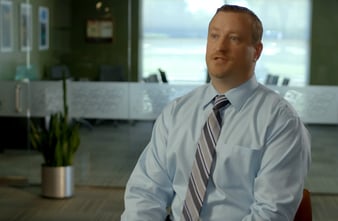
For Lin, Lufkin Business Technology Consultant, that mentor was Ken Martin, the owner of Ken Martin Steakhouse in Bryan/College Station. Lin went to work for him at the age of 19, not knowing (of course) at the time that he’d spend the next 40 years in the hospitality industry.
Before coming to Datamax, Lin worked at various restaurants/caterers, for the Restaurant Enterprise Group, Cracker Barrel (where he helped open the first Cracker Barrel west of the Mississippi), and eventually as the General Manager of a country club in Lufkin.
But Ken Martin’s influence, inside that steakhouse trimming sirloins or waiting tables, remains with Lin even today.
“Ken had a previous background in retail, and he brought those experiences into the restaurant industry,” Lin recalls. “Like, when he was an intern for Sears, the floor manager did a walk through and if he observed something in a display wasn’t quite right, the expectation was that the next time he walked through, it would be right. Ken believed that it was up to you to find those things that needed to be addressed and then take care of them yourself. To be self-motivated and proactive. That really stuck with me.”
As Lin recalls, he also watched his mentor consistently pose questions to both employees and customers. He wanted to know how you were doing. Ways you think customer service could improve. What the customers were really wanting. What the restaurant could do to be relevant to its clients.
“And it’s funny, but we’re in the same sort of place at Datamax,” Lin says. “We’re not used car salesmen trying to just get cars off the lot. We’re trying to find out what our customers really need and what will work for their business. We’re trying to find that right fit for them from the very beginning, because that’s what builds long-term, sustainable business partnerships.”
Applying skills learned on a steak house floor to a business technology showroom floor – that’s the power of a mentor. Who’s your’s? And what can you draw from their influence?
2. Build Your Own Brand.
Building your own brand takes time, says Little Rock Area Sales Manager Ken Allison.
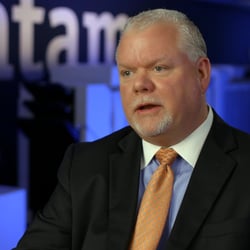 Ken has added elements to his brand with each industry he’s worked in throughout his career. His brand today is his professional identity when we walks through the office door each morning. A personal brand goes much deeper than the outward appearance one might associate branding with.
“I think it first starts with a commitment – delivering on that commitment to excellence,” Ken says. “And integrity, i.e., say what you’re going to do, and then do it.”
Early in his career, Ken started (coincidentally to Lin) in the restaurant business.
“Everyone I managed was older than me. My boss told me, you’ve got to do it better than everybody else to earn their respect,” Ken says. “That included not only being a good manager, but getting on the cooks’ line, cleaning tables, etc.”
The branding: There are two types of leaders: Those who command respect and those who demand respect. Be the one who commands respect.
Later, Ken ventured into men’s clothing. He knew that to be successful, he needed to understand men’s fashion better than anyone else in the industry.
“I read GQ, I researched and understood current trends, what did and did not go together to develop my own sense of style,” Ken says.
The branding: Become an expert in your particular field.
Later on, Ken was in the photo processing business. He recalls a conversation with Chuck Wolf, owner of the legendary photo chain Wolf Camera. At the time, Walmart was moving in across the street from a Wolf Camera Store.
“Chuck said at the time, ‘all things being equal, consumers will base their decision on price. It’s your job to make sure all things are not created equal. What are you willing to do to make sure you’re different?”
The branding: Know your differentiators. Sale the value of what you bring to the table.
3. Be a Lead Researcher in Your Field
Doing a little research could entail recollecting conversations with clients. Studying up on the core competencies and the culture at Datamax. Or, it could be a great book.
 While at Texas Tech University studying Business Management, Keith Lenore was hugely influenced by a book titled “Who Moved My Cheese.” It was a thin, easy read, but its principles regarding accepting change on a professional level impacts his work even today.
“We’re a technology company. With that, things are constantly changing,” Keith says. “We have to make sure we’re coming up with creative ways to provide services for our customers. One of the things I hate today is hearing, ‘well, that’s the way we’ve always done it.’ That’s how you get left behind.”