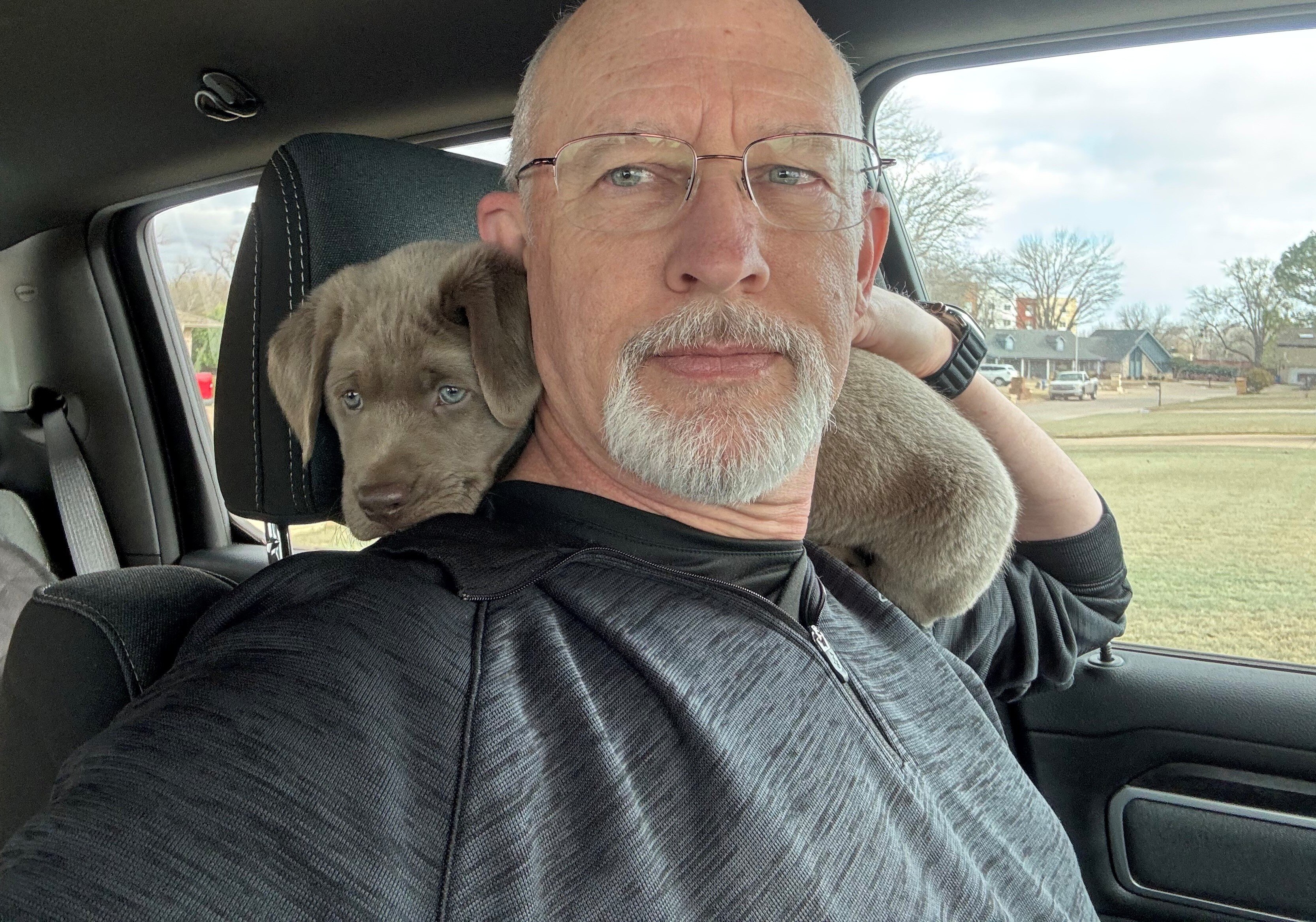
Even though he’s only had the lab a few short weeks, Texas Dispatcher Mark Mansell and his pup Scooby, it appears, have a lot in common… especially when it comes to communication.
Calling a dog a great communicator—maybe even a champion of #8—might sound crazy. Different species, no shared language, right? But stay with us. Dogs don’t just hear commands; they pick up on tone, context, and body language like pros. Their social smarts help them read the room and adjust on the fly. And with that tail-wagging charm? Trust is practically automatic.
Mark, in his years of owning, training, and bonding with his Labradors, doesn’t disagree.
“It's hard to put into words. They read your body language just as much as they are reading yours. They get their positivity - or negativity off of you. They feed off of you,” Mark said.
Our dispatchers are the ultimate navigation experts. They manage service calls, route technicians, report updates to managers, keep customers updated, and direct traffic all places in between. Their work ensures no one is left uninformed—both internally and externally.
Mark is continuously perfecting his craft of communication. He’s a walking, talking endorsement of #8.
He excels at active listening.
Dispatchers are deft at actively listening to callers and responders, filtering out irrelevant details while focusing on key information to relay the correct response. They don’t just hear commands (or requests). They interpret tone, context, and relevancy.
“Listening is the most important communication skill in this role. If you’re not actively listening, you’re not passing on what the actual problem is,” Mark said. “They may have a line on their paper, but they’re not upset by that line. They’re upset because they’ve had two service calls in the last month.”
He’s direct in his communication.
Service Dispatchers must also be clear and direct, giving instructions efficiently to responders, drivers, field personnel, or managers. Just like dogs use simple yet effective cues, dispatchers eliminate confusion by using concise, structured communication.
“Basically, you can’t have fluff. You want to tell each party exactly what they need to know in a way that they’ll understand, without crafting an entire paragraph,” Mark said. “Technicians understand technical language. Customers need it to be more simplified. Managers, it’s ‘this is what the customer is thinking, and this is what the technician needs.’”
He’s positive in his approach.
Dispatchers need to maintain a steady, reassuring tone even in high-stress situations. Their ability to stay composed and offer clear guidance helps de-escalate crises, much like how a service dog soothes its handler in stressful environments.
Here, Mark credits his technicians for minimizing those “high-stress” situations.
“The good news? We’ve got excellent technicians. They’ve been around. And even the young guys have benefitted from their tenured colleagues. With a customer, 90 percent of the time, the customer is always right, but always let them know, ‘I understand, I agree, we need to get this done in a timely manner,’” Mark said. “Really, most of the time a customer is upset, it’s communication that brings the level back down. As long as they understand you know what they need, and that we’re going to get out there in a given time frame, this is how we get them back to being a Raving Fan.”
He’s a clear champion of #8.
Dogs might not use words, but they’re surprisingly skilled at keeping everyone in the loop through instinctive, reliable communication.
Mark’s actual exchanges with clients and colleagues may be largely brief and to the point, but his ability to keep everyone informed builds confidence through consistency, calmness under pressure, and that innate sense of empathy and responsiveness.