The Party Line on Production Print revolves around embracing industry change.
When Robert Baker dove headfirst into this industry almost 30 years ago (half of those with Canon), print operators were barely dipping their toes into things like "print on demand" and "short run color." But further automation through sophisticated software solutions, a growing list of inline finishing features, and the necessity for absolute efficiency inside the print room has made it clear: If production printers don't toe that party line and embrace the changes that technology brings, they risk becoming obsolete.
Datamax has its own Party Line when it comes to Production Print.
A Party Line is described as the policies and principles an organization adopts, and Datamax has its own for Production Print. One of the tenants for our Party Line position is fulfilling the need for that experienced consultant. We believe strongly in partnerships. It's our duty to fully understand an organization's production workflow from beginning to end, to own the technical expertise and all necessary resources. That's what creates Raving Results.
Area Sales Manager for Datamax Arkansas John Garrison has been heavily involved with the production print environment since 2003. Datamax's position - or party line - to him involves digging deep for solutions and maximizing that client partnership...well beyond the sale.
"I believe that in the way of experience and expertise (sales and service) we’re second to none," John said. "Our approach is always to dig as deep as we can to uncover the best possible solution for the customer. We don’t just walk away after the sale. We continually follow up with our production accounts to make certain they get the maximum experience from us as possible."
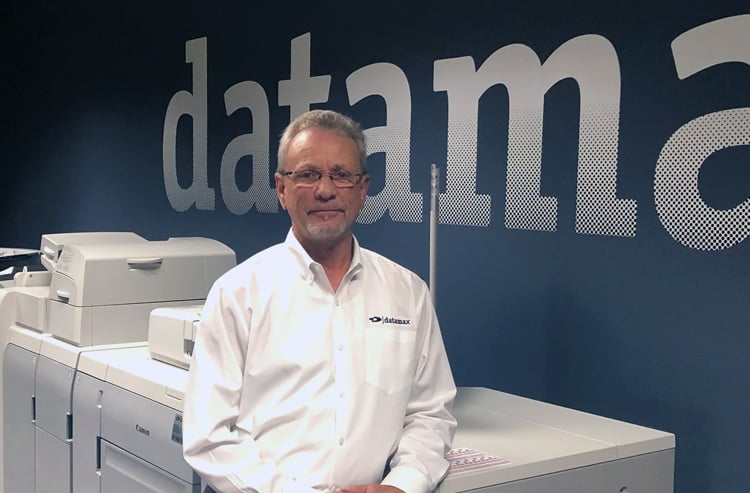
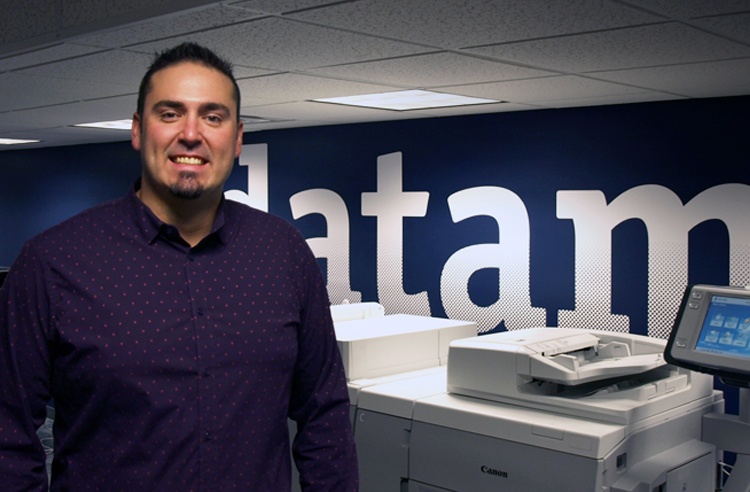
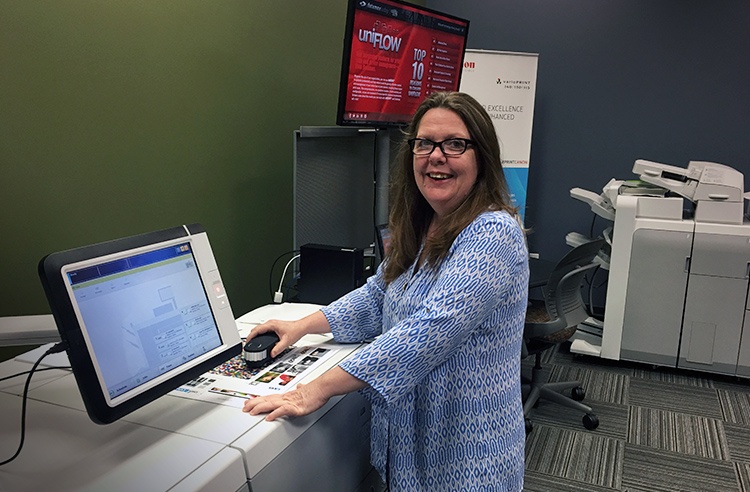
We reached out to our three Production Print Specialists Robert Baker (Tyler office), Susan Salisbury (Dallas/Fort Worth office) and Grant Murray (Little Rock Office) to learn a little more, so we can ALL TOGETHER understand more about our Production Print initiatives. The challenges our clients face. The tools they need to overcome. And the differentiators that Datamax wholeheartedly delivers.
1. What production print challenges/issues do you see production clients and prospects facing today?
Robert Baker (RB): Most production clients and prospects will have unique challenges. The challenges/issues of large organizations differ from smaller organizations. Commercial Print, Print for Pay, and Central Reproduction Departments (CRD) all have different needs. Determining factors such as volume of jobs, types of jobs, product finishing, and organizationally achieving efficient cost or revenue generating business units are all examples of this. That being said, there are things they all have in common. These are quality control, asset investment, and efficiency. All clients and prospects consider these things and weight their decision on specific business needs such as process improvements, consideration of outsourcing versus bringing jobs in-house, revenue generation and/or cost of operation.
Grant Murray (GM): Labor is a big issue for production print today. The traditional offset printers are losing workers to retirement. Modern digital printers are having a hard time convincing the next/younger generation that printing is a career and one that does not necessarily require a 2-4 yr. degree. They need help promoting print as a possible career and in the meantime, we can help by streamlining workflows, building templates and teaching them how, as well as making the most difficult processes of our production presses less intimidating. Having the right solution, from a total package standpoint; software, hardware, service and support, alleviates the fear of being able to retain the employees they do have and hire new ones that will stay.
Susan Salisbury (SS): Production Print Challenges: Overall Color printing and B/W printing runs have come down significantly. Clients are emailing and sending materials electronically faster and quicker than printed materials.
Diversification in Printed Materials: Clients expect a ROI on printing, and in a competitive market place, they want to print on Different media like linen, polyester, die cut paper.
Automation inline finishing- versus printing and setting up off-line booklet maker, creaser, folder, and GBC (General Binding Corporation) punch.
Competitive Pricing for Equipment and Service- Marketplace now is very competitive for product and services. You really have to Present the value of your solution and understand workflow.
2. Explain a few ways that you've seen the production industry change during your career:
RB: In my career, I have seen major changes in the production environment. The evolution of technology has changed the rules in production print, creating new markets for cost effective print on demand publishing and short run color production. Workflow has become more automated and intelligent. This increases efficiencies from job submission to invoicing. The advent of color management has had a major impact on short run color output consistency from job to job. Workflow automation continues to make positive strides in keeping cost down and revenue up.
GM: Since my industry tenure has been just over one year, I do not have much to add to this category, other than the fact that I have seen a responsiveness from the manufacturers not to become obsolete. I.E. invest in R&D and Marketing that aligns them with not only the present state of printing but also the future to come. I am not naïve to the fact that the models coming out today have been in R&D for some time, but there release of key and relevant features to the current state of the industry seems very timely.
SS: I'll mention four:
- The number of of Printers (print for pay market) in DFW has reduced significantly
- Cost of Production Printing has come down significantly.
- Market Place is very competitive with Canon, Xerox, Ricoh, and Konica Minolta. Traditionally, Xerox has owned this space. Due to all the changes at Xerox, clients are looking for other solutions.
- Clients have more information before you meet with them. Traditional ways of phone calling and cold calling is going away. Linkedin, referals, specialized consultant more prevalent.
3. How does Datamax separate itself from other production print vendors?
RB: Simply put, the Datamax Culture separates us from the other vendors. The Datamax Discovery Process provides for a detailed discovery with clients and prospects. Datamax leverages a team of experienced professionals that focus on customer goals and objectives. Our team stays engaged in any new developments in technology and consistently monitors industry market trends.
GM: Datamax has a reputation for having standards that are non-negotiable. We will provide outstanding service, quality support, exceptional recommendations for technology present and future, owning our own leasing company allows us exceptional flexibility in doing what is best for the customer, and lastly but possibly the most important is our Partnership Review process that allows us to maintain existing relationships but more importantly go deeper into existing accounts. In the words of Mary Poppins, “These are a few of my favorite things.”
SS: We are looking for business partners, working together can bring out the best of both organizations. We strive to help build businesses in building their technology and bringing all facets to support this effort whether it be print, IT, or document management. It takes a lot of resources to make this happen from service, client support, billing, and account accountability reviews. Business are changing and we need to change with them.
4. What are some ways you strive to remain relevant?
RB: Knowledge. The strength of Datamax is the knowledge we carry to our clients and prospects. The production print environment is fluid and constantly changing. It is imperative to stay on top of changes in the market, listening to our customers, and understanding how workflow tools can enhance our customer’s ability to remain successful and competitive.
GM: I strive to keep up with industry trends through Print industry publications like Printing Impressions, etc. I try to attend one webinar/month on something production related. In addition, attend at least one competitive analysis training per year that lets me know what the other manufacturers in our industry have to offer and what is trending in the industry as a whole. Maintaining contact with specialists around the country has proven valuable as well to see what they are encountering in the industry in their part of the country, as it seems that Arkansas catches up eventually, and I will know what to expect is coming.
SS: First, understand clients problems they are facing and come up with solutions that are viable to make a difference. Be accountable to the client and follow up on any and all issues they maybe having. Be a resource and make yourself available. Be a sponge with all technology, and be excited about short run digital. Figure our how you can make a difference in a business with business impact and you are a resource.
5. What's the most rewarding aspect of your production print role?
RB: The most exciting aspect of my role in production print is creating Raving Fans. There is great satisfaction delivering a solution to a customer that helps them achieve their goals, grow their business, and provide a quality product to their customers.
GM: I love discovering new opportunities, not the ones that every dealer in the region is going after. But rather the difficult ones, where they are either outsourcing or delving off into something new. The discovery process, assessing their needs and providing the right set up and solution, that saves them time, money, and headaches. This is the most rewarding thing to me to see that I have provided the right solution, see it through from inception to implementation and walk with them to the end. It is these instances that “Create Raving Fans” in my opinion.
SS: All I can say it’s a great time to be selling Canon Technology! It’s hitting all the right buttons in in workflow, budget, quality of product.