An accent note, in musical terms, is when a note or phrase is emphasized with an increase in intensity above the others. It is designed to create a dramatic effect.
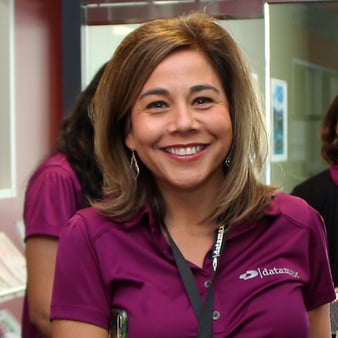
Little Rock Solutions Analyst Trish Williams lives for those accent notes that appear along the course of a customer conversation, or as she calls it, that “Aha” moment.
The most rewarding part of her job is that moment a light goes off. As the listener, she suddenly comes to attention as a customer reveals a pain and she can say ‘I’ve got the perfect solution for that." Trish’s main two solutions-based focuses are Output Print Management as a whole, and Document Scan/Capture Process solutions. The options we offer and the training that goes along with it really expands our solutions capability to think outside of the proverbial box.
How many hands are involved with delivering a symphony performance? A technology solution?
It takes the entire orchestra. It also takes all of us at Datamax. From sales to set up, delivery and configuration, to the ongoing service, it takes an entire organization to deliver a solution.
But just as musical boundaries are continuously pushed — so too are the boundaries of technology.
How do we prepare our customers for the future? How do we acquaint ourselves, and deliver advanced solutions that make an impact for our customers long term?
As the solutions “guru” in Little Rock, Trish spends any downtime she has researching a number of software solutions that come across her desk. She leans on manufacturer partners for updates, upgrades, and new products coming to market. But she also tests them herself regularly.
“I love going into the demo room, playing with different settings, testing the functionality on a number of computers, and really getting my hands dirty with a solution,” Trish says.
These include Output Management solutions like uniFLOW Online and PaperCut, scan security solutions like MxHero, and even fax server solutions like RightFax. In working with sales reps, she listens for trigger words, customer pains, or needs that might be resolved with a solution in her arsenal.
Why are Advanced Solutions so Important?
“If we’re not aware of it, we can’t introduce it. And if we’re not going through these advanced solutions with customers, our competition is,” Trish said. “Every single year our customers are evolving, their business model has changed. We need to be the ones saying ‘Have you thought of this?’ or “is this something that might help?’
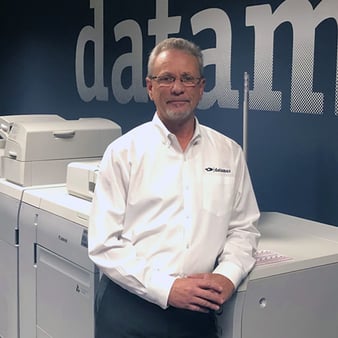
East Texas Solutions Analyst Robert Baker warns against the ominous phrase, “oh, we can do that too.”
“I’ve been harping on this my whole career – if we don’t educate our customers, somebody else will. If somebody else does it first, we’re left with that phrase ("oh, we can do that too"), and that’s not a good position to be in,” Robert said.
How do we Introduce Advanced Solutions to Customers? 4 good things to know.
1. Know when to introduce them.
For an existing client, this process should be ongoing. Whether it’s an email or a closing comment at the end of a meeting, never let an opportunity to at least mention a solution go by.
“We are the subject matter experts in the industry we’re in,” Robert said. “That customer very likely doesn’t know that certain technologies exist. It’s our job to let a customer know what’s going on in the industry at large.”
A perfect, specific, opportunity? The Partnership Review.
“This is a great time to remind our customers that we don’t just sell copiers. We are a partner in all these different areas, and these elements (security, workflow, etc.) are so important, and here’s why,” Trish says.
For a prospective client, Robert says it’s good to uncover a pain point that a solution might then resolve. A classic example he’s used?
“I like to ask, ‘give me an example of how documents pass through your Accounting Department. What’s good about it, what’s bad about it?' Once you discover those, then you have the opportunity to say ‘this solution might help you get from point A to point B more efficiently.”
2. Know how to introduce them.
How do we approach clients with advanced solutions? Here’s a great tip:
“Don’t ask closed-end questions,” Trish says. “After asking two or three questions, and you’ve let them explain in their own words what is going on, you’ve got a better idea of what solution may be relevant,” Trish says.
3. Know whom you’re introducing them to.
Robert advises that you’ll have different conversations with different personnel at your prospect or customer site. You have to pick those conversations carefully.
“An office manager will hear about documents that lay on an approver’s desk for a week because they’re out of the office, and making payments is a challenge,” Robert says.
There’s a solution for that.
“IT personnel will want to get in the weeds. First, they want more information,” Robert says. “Secondly, they want to make sure you know what you’re talking about.”
4. Know whom to lean on.
Ever have an IT director asking questions you don’t know the answer to? Don’t claim to be the expert. Simply lean on the experts at Datamax.
Robert Baker in East Texas. Trish Williams in Arkansas. Rachel Rhodes in Dallas/Fort Worth. These are just three examples of trusted solutions specialists who are willing and able to join in the conversation and guide prospects or clients through their own relevant solutions journey.